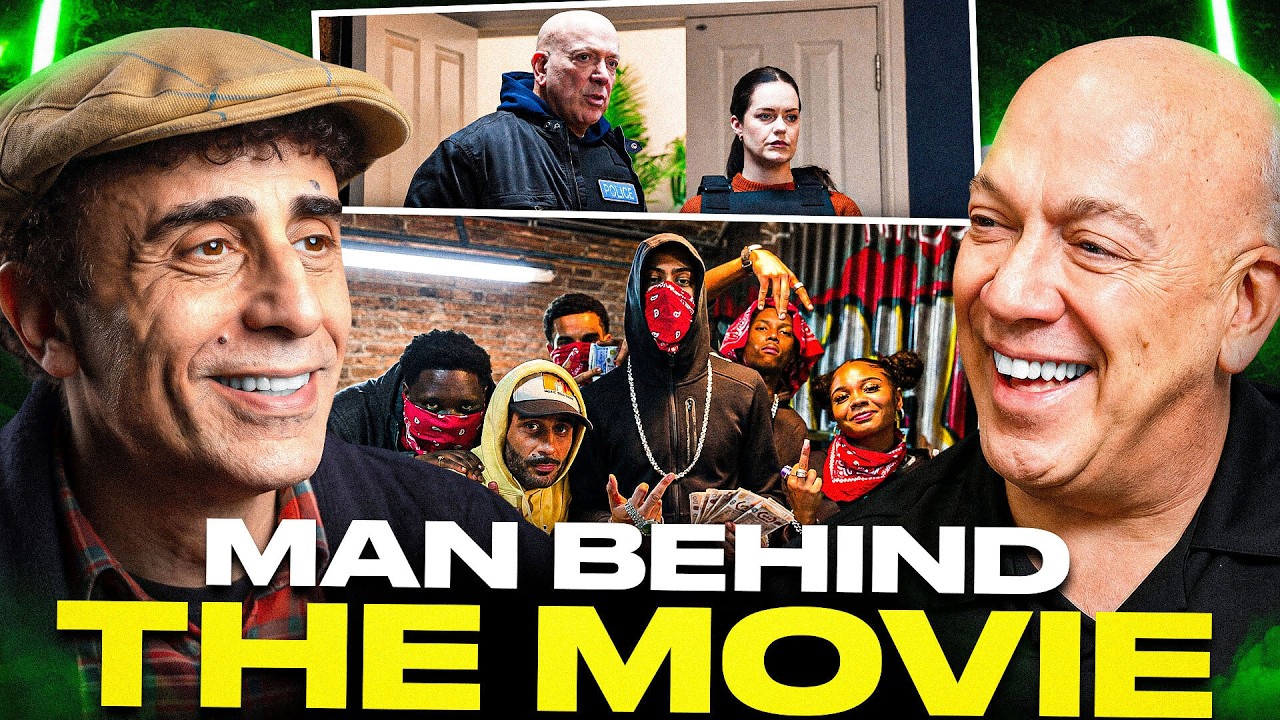
For filmmaker Monte Bdawi, directing Tales from the Trap represents far more than another project. It is the result of more than a decade spent developing his craft, telling stories and waiting for the opportunity to finally direct his first feature film.
Appearing on the Tales from the Trap Podcast, Monte joined Terry Stone to discuss the journey behind the movie, the realities of independent filmmaking and why representing British street culture authentically became such an important part of the production.
From last-minute casting changes to working with rappers, established actors and first-time performers, the road to Tales from the Trap was anything but straightforward.
Monte Bdawi’s Journey to Becoming a Film Director
Monte’s ambition to direct was shaped by experiences that went far beyond the film industry.
After returning to Iraq following around 20 years away, he visited Baghdad during a turbulent period and came back to London with a determination to tell stories.
The experience made him think seriously about filmmaking as a way of giving people a voice.
That motivation became even stronger following a tragedy involving one of his cousins. Monte went on to write his first short film, Senseless, which he travelled to Jordan to shoot.
That was in 2009.
From there, he continued working across commercials, music videos and short films, building experience while pursuing the bigger goal of directing a feature.
More than a decade later, Tales from the Trap finally provided that opportunity.
Why Tales from the Trap Needed the Right Director
Finding a director for Tales from the Trap was not necessarily simple.
During the podcast, Terry explains that some filmmakers were reluctant to become involved because they viewed the project as a “hood film”. However, both Terry and Monte argue that this description misses much of what the film is trying to explore.
Rather than glamorising crime, violence or drugs, the intention was to show the reality of the environment surrounding its characters.
For Monte, understanding that environment was crucial.
He talks about growing up around a culture where survival can influence the decisions young people make. Financial pressure, limited opportunities, family circumstances and the environment somebody grows up in can all shape the direction their life takes.
That personal understanding helped make Monte a natural fit for the film.
Representing British Street Culture Authentically
Authenticity became one of the defining ideas behind Tales from the Trap.
Monte wanted the characters, language and culture of the film to feel genuine rather than like somebody’s interpretation of a world they had only observed from the outside.
The film also reflects the multicultural nature of modern Britain, incorporating British, Middle Eastern, North African and wider street culture.
For Monte, that representation was not about focusing on one particular background. It was about reflecting the communities that exist across London and Britain today.
It also influenced the casting.
Rather than relying exclusively on trained actors to portray musicians, the filmmakers wanted performers who genuinely understood that world.
As Terry puts it during the conversation, rappers are already performers. The challenge was finding people with the charisma and ability to translate that presence to the screen.
A Cast Bringing Together Music, Film and British Culture
Tales from the Trap brings together an unusually varied group of performers.
The podcast discusses names including Vas Blackwood, Eddie Hall, Adam Deacon, Fraser Clarke, Olivia Hawkins, Fumez, Amzino and Kim Tiddy, alongside musicians and performers appearing throughout the film.
There was also a deliberate attempt to balance different levels of acting experience.
Some performers were stepping onto a film set for the first time, while others came with extensive acting or theatrical backgrounds.
For Monte, directing meant understanding how to communicate differently with each person.
Some needed reassurance. Others wanted to experiment with a scene. Occasionally the cast and director would simply start exchanging ideas and discover something better than what had originally been planned.
That collaboration became an important part of the production.
The Chaos Behind Independent Filmmaking
If the finished movie makes filmmaking look glamorous, the story behind it certainly was not.
Just before filming began, one actress dropped out after accepting another job. Then the actor originally due to play the lead suffered serious injuries and was unable to continue in the role as planned.
Other casting problems followed.
At one stage, Danielle Westbrook was expected to play the film’s “gangster granny”, but a hospital visit suddenly left the production searching for another performer over a weekend.
After frantic phone calls and messages, Kim Tiddy stepped into the role.
According to Monte and Terry, she delivered.
These situations underline one of the biggest challenges facing independent films. There is rarely enough time or money to simply delay the entire production.
Sets have been booked. Cast members have schedules. Crew members have other jobs. When something changes, the production has to adapt immediately.
As the team discovered repeatedly, independent filmmaking often means solving problems as quickly as they appear.
Giving New Talent an Opportunity
One of the elements Monte is particularly proud of is the opportunity Tales from the Trap created for people who may otherwise have struggled to enter the film industry.
During the podcast, he speaks about the lack of opportunities facing some young people and the importance of environment in shaping their choices.
A film production cannot solve those wider issues, but it can open a door.
Several people involved in the movie were experiencing a professional film set for the first time. That meant Monte’s responsibility went beyond simply deciding where the camera should go.
Directing became about building relationships, creating confidence and helping performers deliver something they could be proud of.
Could There Be a Tales from the Trap Sequel?
Despite the challenges of making the first film, attention is already turning towards what could happen next.
The team openly discusses the possibility of a sequel or even a prequel.
Without giving everything away, the story leaves questions surrounding several characters and creates opportunities for their stories to continue.
Monte also says he hopes his next project will be another feature film.
After waiting years for his first opportunity, he now wants to take everything he learned from Tales from the Trap and carry it into the next production.
Persistence Finally Pays Off
Perhaps the biggest story behind Tales from the Trap is not found in any individual scene.
It is Monte Bdawi’s journey to the director’s chair.
Since making Senseless in 2009, he continued shooting commercials, short films and music videos while working towards a feature film. Opportunities came close, but the breakthrough took time.
In 2026, that persistence finally resulted in his feature film directing debut.
Tales from the Trap may tell stories about British street culture, music, survival and opportunity, but the story behind the camera carries its own message.
Sometimes success does not arrive quickly.
Sometimes you spend years developing your skills, dealing with setbacks and waiting for somebody to give you the opportunity to prove what you can do.
For Monte Bdawi, Tales from the Trap is that opportunity.