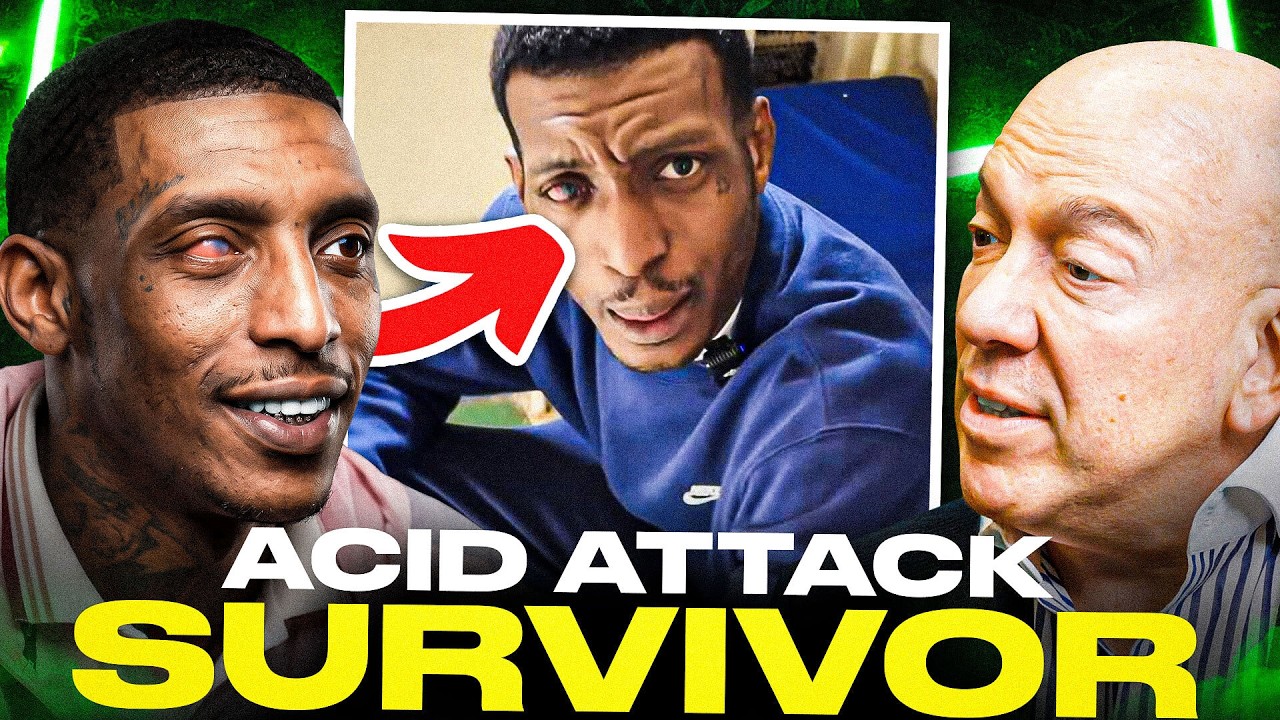
How many times can one person come face to face with death and still find a way to walk away?
In a powerful episode of the Tales from the Trap podcast, Terry Stone sits down with East London personality and content creator Sticky With It. What begins as an energetic and often funny conversation quickly develops into a raw account of violence, trauma, prison and personal transformation.
Sticky’s story is not a fictional gangster tale or a glorified account of life on the streets. It is a warning about the consequences of crime, the psychological damage caused by violence and the difficulty of escaping a lifestyle that becomes normal from an early age.
Having survived an acid attack, lost the sight in one eye, faced guns, suffered multiple stab wounds and served several prison sentences, Sticky has experienced more danger than most people could imagine. However, the most important part of his story is not simply how he survived. It is how he finally began to change.
Growing Up in East London
Sticky was born at Whipps Cross Hospital and grew up around Leyton, Bakers Arms and the Beaumont Estate in East London.
Despite the direction his life eventually took, Sticky describes himself as a talented child. He was academically capable, competed in several sports and showed genuine promise as a footballer. He captained his school team, represented his district and was regularly watched by scouts.
For a short time, football offered a possible route away from the streets.
However, school became difficult. Sticky discusses living with undiagnosed ADHD, which affected his concentration and behaviour. Although he was intelligent and talented, he frequently found himself in trouble.
He and his friends also became involved in small-scale theft and schemes at a young age. What initially appeared to be mischievous behaviour gradually became more serious.
How Street Life Became Normal
One of the most revealing parts of Sticky’s interview is his explanation of how gang culture can become normal within a neighbourhood.
He does not simply blame the area where he grew up. He admits that plenty of people lived nearby without becoming involved in crime. However, older generations, local relationships and the behaviour he witnessed all influenced the choices he made.
The community contained loyalty, friendship and support, but it was also surrounded by robberies, weapons and territorial conflict. Sticky grew up watching older figures return with expensive jewellery and money, despite having no obvious legitimate income.
For a young person looking for identity and status, that lifestyle appeared attractive.
Over time, Sticky became involved in robberies, drug dealing, fraud and violence. He describes carrying weapons and entering dangerous situations with a sense of invincibility.
Looking back, he can now see how reckless that mindset was.
Surviving a Life-Changing Acid Attack
One of the most disturbing moments in the podcast is Sticky’s account of losing his eye during an acid attack in Telford.
Sticky had travelled outside London while allegedly involved in drug dealing. During a meeting, he noticed a man holding what appeared to be a clear bottle of liquid. Because the bottle did not look threatening, Sticky initially paid little attention to it.
The man suddenly threw the liquid into his face.
Within seconds, Sticky’s vision became blurred and his skin began to burn. He also struggled with the effects of inhaling the chemicals. Despite the severity of the attack, he initially refused to go to hospital because he believed he was wanted by the police.
Instead, he attempted to wash the chemical from his face using water at a petrol station.
Sticky did not receive hospital treatment until days later. Doctors reportedly told him that receiving immediate medical attention may have helped preserve more of his sight. He ultimately lost the use of one eye.
The attack was one of several near-death experiences that left permanent physical and emotional damage. Sticky has also had guns pointed at him, bullets fired in his direction and machetes used against him. His life included armed robberies, drug dealing, violence and seven prison sentences.
The Psychological Impact of Violence
Although Sticky often tells his stories with humour, the interview reveals the lasting psychological effects of street violence.
He admits that he remains deeply paranoid. Even ordinary situations can cause him to assess potential threats, escape routes and the behaviour of strangers.
The words “don’t worry” can trigger particularly strong feelings because people used the phrase before several traumatic events in his life.
Sticky also speaks openly about emotional numbness. He survived attacks and lost people close to him without crying. Rather than processing the pain, he frequently used alcohol, partying and criminal activity as distractions.
This emotional detachment is one of the clearest examples of the damage caused by repeated trauma.
Sticky may have physically survived his experiences, but surviving and healing are not the same thing.
Prison Did Not Initially Change Him
Sticky first entered prison in 2012 after being convicted in connection with a series of train robberies.
He admits that he was frightened when he arrived. Stories about prison violence and intimidation filled his mind while he sat alone in the prison transport van.
However, he quickly adapted.
Rather than rehabilitating him, Sticky believes prison initially made him more dangerous. He learned how to fight, built relationships with other offenders and became more deeply connected to criminal networks.
When he was released, he returned to the same lifestyle.
This cycle continued through recalls, further arrests and additional prison sentences. Each time, he believed he could continue living the same way and somehow achieve a different result.
Eventually, he recognised that this was impossible.
Understanding the Trap
Sticky describes street life as a trap because it creates the illusion of progress.
A person might earn money, buy clothes or gain status, but everything can disappear through arrest, robbery or violence. They are then forced to begin again.
Sticky never reached the level of security he imagined. He repeatedly made money and repeatedly lost it.
He came to understand that he had spent years going around in circles.
The lifestyle promised freedom, but delivered paranoia, prison and permanent injuries. It also cost him time that he could never recover.
How TikTok Helped Sticky Change His Life
After his most recent prison experience, Sticky began focusing on social media.
Friends encouraged him to bring the personality and humour he had previously shared on Snapchat to TikTok. His videos began gaining attention, opening opportunities in entertainment, boxing content and online streaming.
Sticky has since appeared with platforms including AFTV and talkSPORT. He has also begun developing his YouTube channel and exploring acting and presenting opportunities.
He credits TikTok with giving him a positive direction and something meaningful to build.
Social media did not erase his past, but it gave him a new focus. Instead of directing his energy towards crime, he could use his personality, storytelling ability and ambition to create a legitimate career.
A Cautionary Tale About Street Life
Sticky’s story is compelling because he refuses to pretend that the past did not happen.
He acknowledges that some of his stories may sound entertaining, especially because of the humour with which he tells them. However, behind the jokes are victims, lost years, prison sentences and permanent trauma.
He does not present street life as a successful career. He describes it as a cycle that nearly destroyed him.
Sticky now wants peace, opportunity and the chance to support the people he loves. He no longer wants old conflicts or street politics to take away the future he is building.
His message is simple: possessions, reputation and temporary money are not worth losing your freedom or your life.
Life Begins at 33
Towards the end of the conversation, Sticky says that life begins at 33.
After years of violence, crime and prison, he finally believes he has something positive ahead of him. He wants to grow his platforms, work in entertainment and use his story to influence others.
Sticky With It is still living with the consequences of his past, but he is no longer allowing that past to control his future.
His appearance on Tales from the Trap is funny, shocking and deeply uncomfortable at times. Most importantly, it is honest.
This is not simply another gangster story.
It is a story about survival, trauma and the possibility of change.